

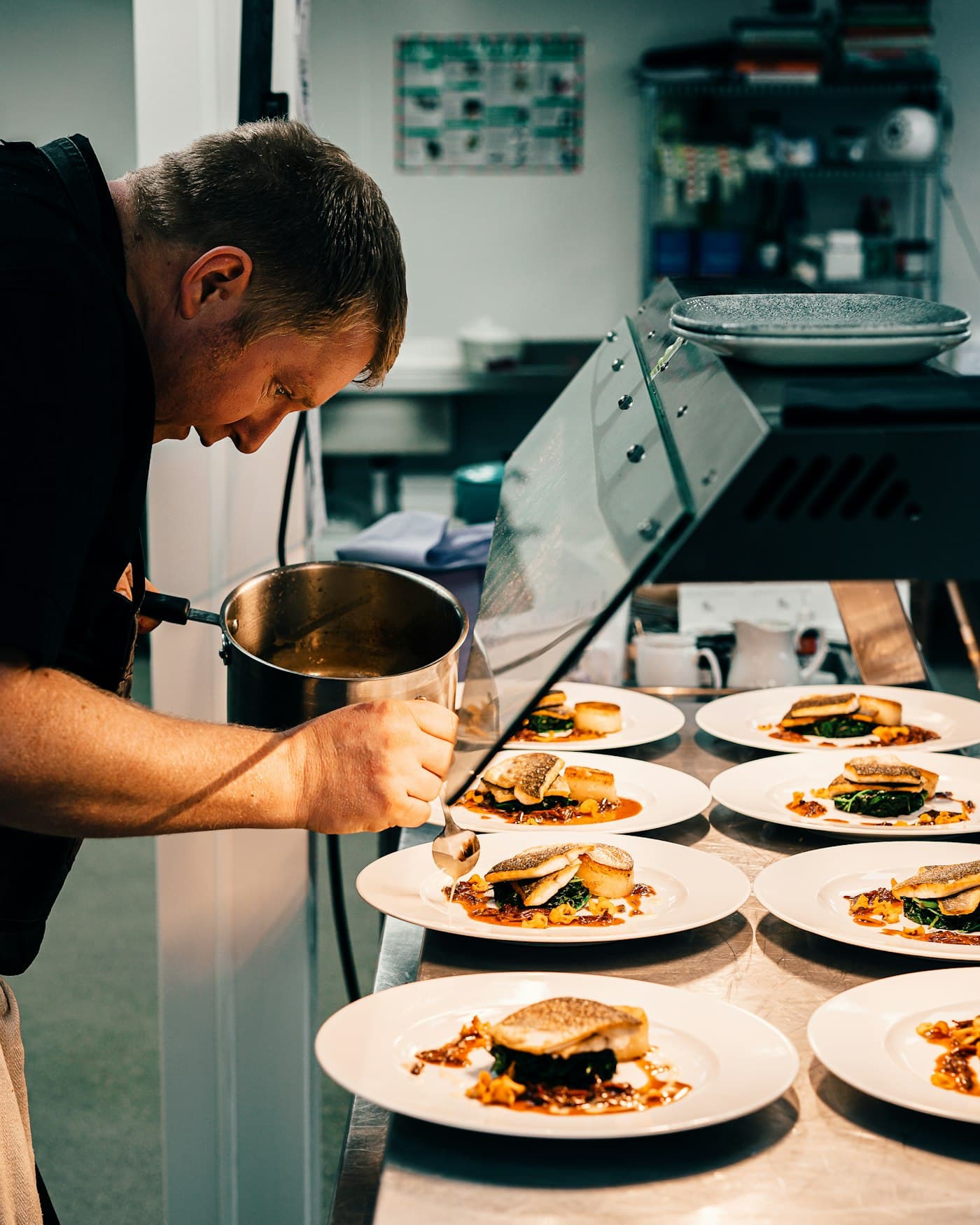
Accounting for restaurants and cafes: what makes it different
Accounting for restaurants and cafes runs on a daily rhythm. Ingredients turn into dishes, perishables spoil fast, staff work in shifts, and money comes in through the cash register, card terminal and delivery apps. If these flows are not linked, the real cost of a portion stays a guess.
Recipe cards and portion cost
Every dish on the menu needs a recipe card (fișă tehnologică): ingredients, quantities and processing losses. With it:
- raw materials are deducted from stock automatically with each sale;
- you see the cost and margin of every menu item;
- stock counts reveal the gap between theoretical and actual usage.
A card that is not updated after a supplier or recipe change distorts both stock records and pricing.
Perishables and write-offs
Vegetables, meat, dairy and pastries have a short shelf life. Natural losses are expensed within the norms approved in your business, and anything above those norms is not tax-deductible. Every write-off needs an act stating the reason and quantities. Partial stock counts by category, monthly or even weekly, show early where goods go missing.
Cash register and takings
Sales in cash and by other payment instruments go through fiscal cash registers connected to the SFS system. Z reports must match terminal receipts, payouts from delivery platforms and bank statements. Card tips need a clear rule on how they are recorded and passed on to staff, because they affect both takings and payroll.
VAT in HoReCa
In 2026, food and non-alcoholic drinks served in HoReCa venues, as well as accommodation, are taxed at the reduced 8% VAT rate. Alcoholic drinks are taxed at 20%, so your menu and cash register need separate rate settings. The 2027 fiscal policy approved by the Government provides for raising the reduced HoReCa rate to 12%.
Shift staff
Cooks, waiters and bartenders work variable schedules. Pay is calculated from shift timesheets, with the extra pay for night hours, overtime and public holidays required by the Labour Code. Then 12% income tax, the 9% CNAM contribution and the 24% employer CNAS apply.
What the Momentum Consult team does for restaurants and cafes
- review recipe cards and how they link to your inventory software;
- keep stock records for the kitchen, bar and storeroom;
- prepare write-off acts and take part in stock counts;
- reconcile the cash register, terminals and delivery platform payouts;
- run shift payroll and file reports with the SFS, CNAS and CNAM;
- prepare monthly reports on food cost, beverage cost and staff cost.
Services that fit HoReCa
Stock records, VAT and reporting are part of our accounting service. For shift schedules and extra pay, add payroll and HR. If past years' records have gaps, we start with bookkeeping recovery.
Book a free consultation. Tell us how many venues you run, which software you use and how your team works, and we will propose a clear way of working.